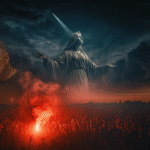
Do you ease into fjaka, or does fjaka ease into you? That’s the kind of question that sounds more like a zen koan than a cultural event invite—but that’s exactly how the Museum of Fjaka, the world’s first museum dedicated to this elusive Dalmatian state of restful presence, opens its digital doors on July 1st.
Yes, you read that right—the Museum of Fjaka is real, online, and ready to gently interrupt your frantic scrolling. This virtual platform, hosted on muzejfjake.hr, is a tribute to the intangible rhythm of Mediterranean stillness, inviting you to slow down, sink in, and maybe, just maybe, do absolutely nothing.
Art as the language of fjaka
Through five interconnected exhibitions, the Museum of Fjaka merges contemporary art and scientific insight to evoke fjaka not as laziness, but as a cultural treasure and refined life philosophy. Here, fjaka isn’t a joke—it’s a lifestyle with deep roots in Dalmatian tradition.
At the helm is Lana Rogošić Blagojević, founder of the museum and initiator of the association “Museum of Fjaka – Institute for Cultural and Scientific Research of Fjaka”. What started as a cultural curiosity grew into a full-fledged platform affirming fjaka as part of Croatia’s intangible heritage—with global relevance.
Three artists capturing the rhythm of nothingness
The debut exhibitions feature three Croatian artists who don’t just understand fjaka—they embody it:
Tomislav Marcijuš – Lace Under the Sea
Using AI tools, Marcijuš blends traditional Dalmatian lace with dreamy underwater landscapes. His work floats like a lullaby: “The sea is my childhood, my escape, and my return. Everything changes—except the sea.”
Martina Movrić – Slowed Down
Shot entirely on the island of Vis, Martina’s photo journal is a quiet ode to the present moment. Her visuals blur the line between documentary and dream.
Anita Krmek – Watercolor Stillness
From a peaceful terrace in Šibenik to the light dances beneath the sea, Anita’s watercolors are painted memories of presence. For her, fjaka is equilibrium: “Sometimes, you’ve done the most for yourself when you’ve done nothing at all.”
Coming August 1: two more artists join the gallery
Dora Barbarić (Monsieur Dorian): Illustration that captures Mediterranean light, people, and rituals.
Karla Mrčela: Fresh Mediterranean perspectives woven into visual stories.
The Slow Living Magazine
Beyond the gallery, the Museum also launches a digital magazine dedicated to slow living. Think seaside imagery, ambient soundscapes, and narrative reflections that invite you to exhale deeply and stay awhile.
If this sounds like your kind of digital escape, take the leap (or rather, the gentle glide) into fjaka – but only if you’ve got time. And if you don’t, then you need fjaka more than you know.
Why fjaka matters—globally
This isn’t just about Dalmatia. The Museum of Fjaka asks us all to reconsider our tempo, our values, and our addiction to productivity. It’s especially relevant for women aged 25–45, juggling careers, care work, and societal pressures—with little room left for silence.
This project is not about doing less for the sake of it. It’s about doing less to feel more.