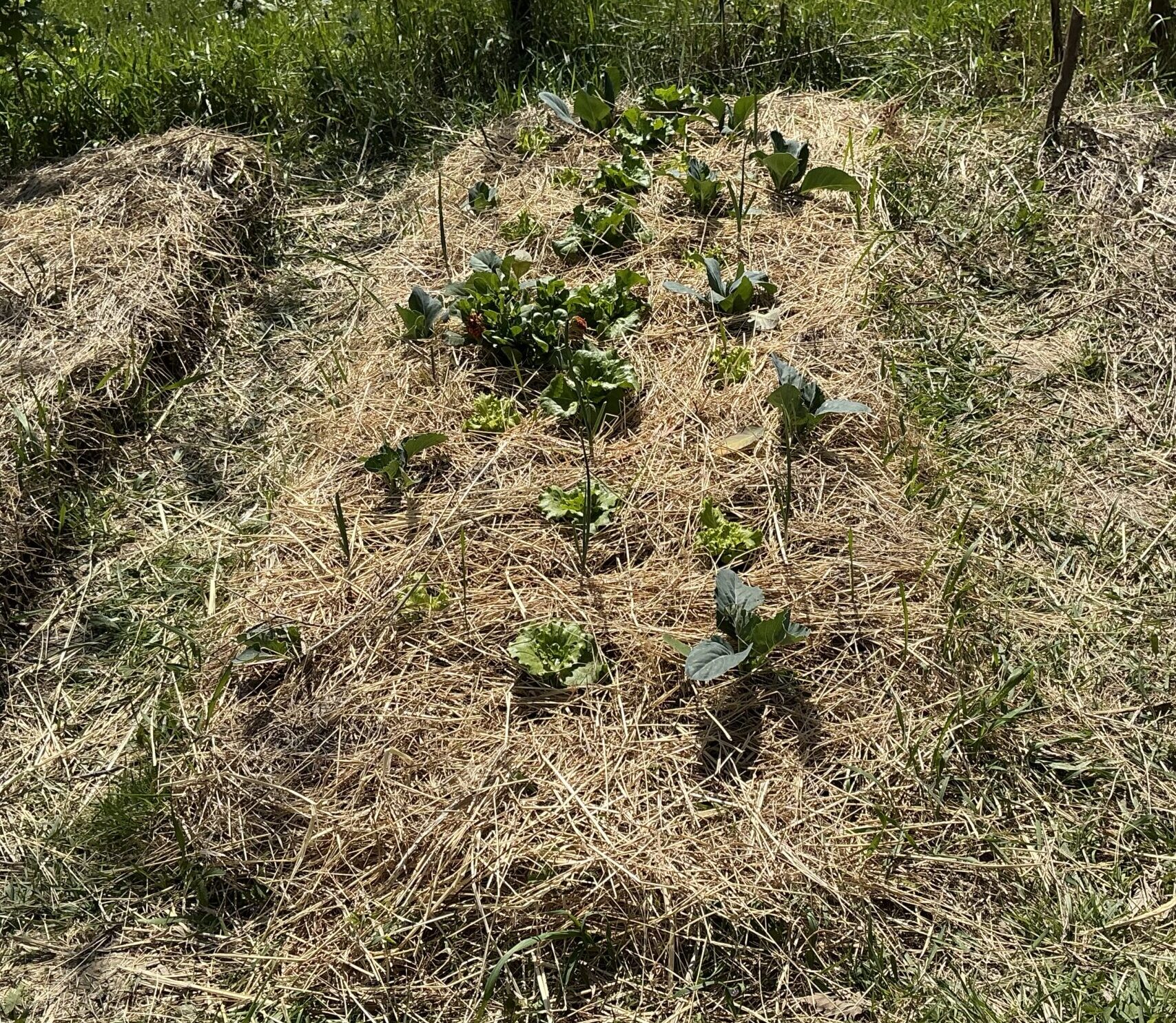
Food prices are rising. Supply chains are more fragile than we thought. What for years looked like a guarantee, a full shelf at the supermarket, no longer feels so certain. In that context, growing your own food stops being a romantic idea and becomes something entirely concrete: a small but real source of independence.
You don’t need an acre of land for this. A fifty-square-metre garden, or a well-organised balcony, with the right approach can supply a family with fresh vegetables and herbs from April to April.
The Permamodel: a Garden That Works for You
Trag Biljke introduced the concept of the permamodel as an organising principle for the garden. The idea is straightforward: instead of replanning from scratch each season based on intuition, you set up a model in advance that accounts for orientation, plant height, companion relationships and crop rotation.
In a small garden up to 50 square metres, this means dividing the space into zones. Tall plants such as tomatoes, peppers or climbing beans go to the north so they don’t shade shorter ones. Herbs, basil, parsley, mint, thyme, go along the edges or in dedicated beds where you can reach them without stepping on the soil. Between vegetable rows, space is left for companion plants, marigolds, dill or nasturtiums, which attract beneficial insects and deter pests without any chemicals.
On a balcony the logic is the same, just vertical. Tall plants in larger containers along the railing, shorter plants and herbs in front of them, and each pot with a clear role in the whole.
Soil Is the Foundation, Not a Detail
The permaculture approach starts with soil, not seeds. Healthy soil rich in organic matter retains moisture, meaning less frequent watering, and feeds plants slowly and steadily. On a small surface this is easy to achieve: compost from kitchen scraps, mulch from cut grass or straw between rows, and the rule that soil is not dug without reason.
Digging breaks soil structure and destroys the network of microorganisms doing work we can’t see. Once you establish a healthy base, the garden begins to demand less and less intervention. On a balcony, the same role is taken on by a quality permaculture substrate mix with regular compost additions.
Varieties Worth Choosing
Biljana Banović of Trag Biljke consistently emphasises one principle: grow what you love to eat, but don’t let that limit you. Your own garden is an opportunity for varieties unavailable in shops, old tomato cultivars with flavour that industrial production cannot replicate, herbs in varieties a supermarket never stocks.
Old varieties are also hardier, adapted to the local climate and can be saved for seed the following season. That means once you have good seed, you stop buying it.
What You Can Harvest from 50 Square Metres or a Balcony
On such a surface, with good layout, it is realistic to have tomatoes, courgettes, lettuce, chard, carrots, onions, garlic and a dozen herb varieties growing simultaneously. With winter preparation, the same space carries late crops such as kale, spinach or winter salad. On a balcony the scale is more modest, but with vertical growing and well-chosen varieties, the results are surprisingly tangible.
This is not self-sufficiency in the full sense. But it is the difference between dependence on a single food source and a situation where you know there is always something fresh in the garden, something you grew yourself, without packaging, without transport and without questions about where it came from.
In uncertain times, that difference carries weight.