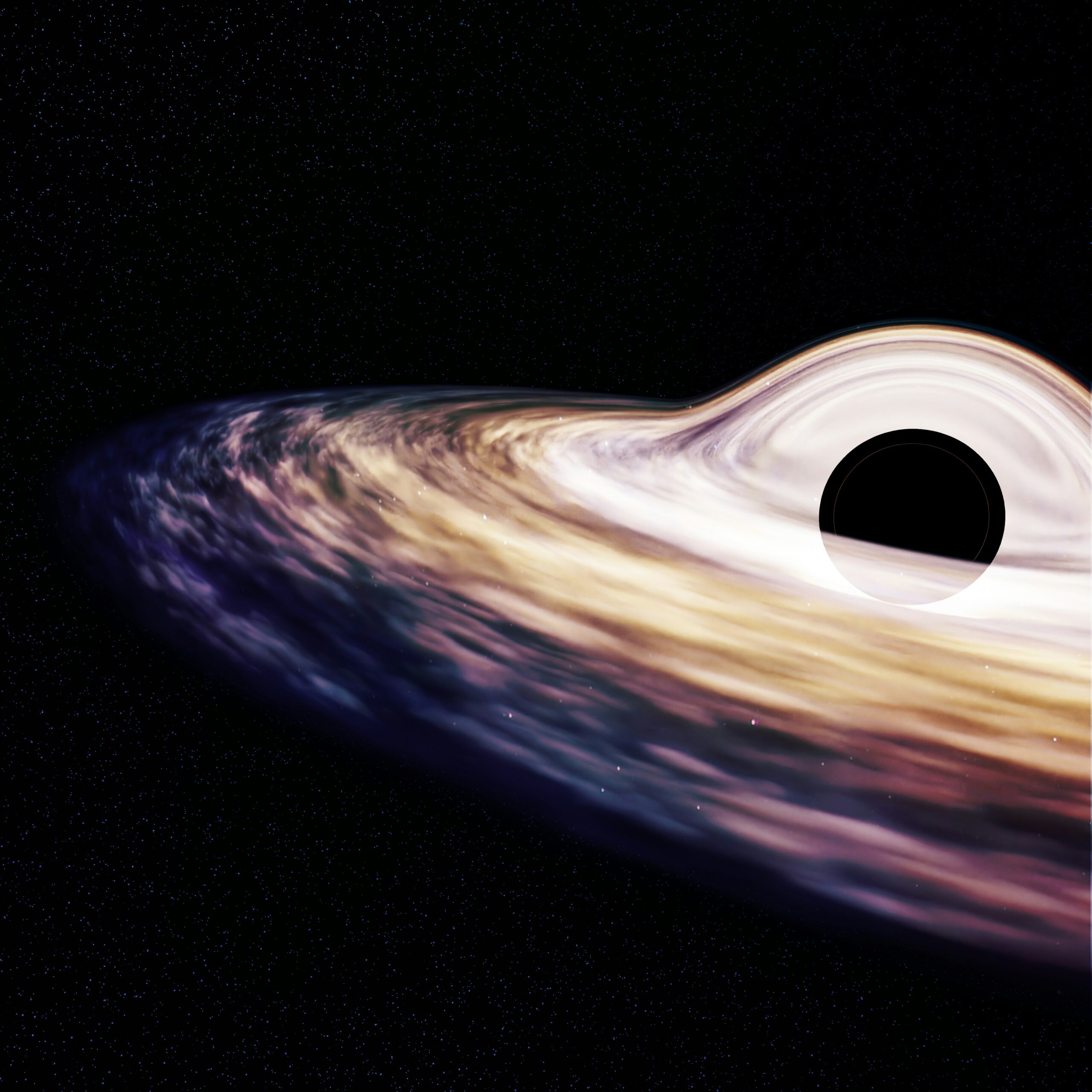
New observations from the Andromeda Galaxy provide the strongest evidence yet that a black hole can form without a supernova explosion
The birth of a black hole is usually linked to one of the most dramatic events in the universe. A massive star explodes as a supernova, and its core collapses into an extremely dense object whose gravity is so strong that not even light can escape.
New observations suggest a different scenario. In some cases, a black hole may form almost silently, without a spectacular explosion.
A star that simply vanished
For years, scientists monitored a large and luminous star known as M31-2014-DS1. It was located in the Andromeda Galaxy, the neighboring galaxy of our Milky Way, about 2.5 million light years from Earth.
Data collected over four decades show that the star remained steadily bright until 2014. In 2015, it briefly became even brighter, and then it almost completely disappeared from view.
No classical supernova explosion was recorded. Instead, the evidence points to a direct collapse into a black hole.
How we know a black hole is there
Although the star itself vanished, astronomers detected faint emission from surrounding gas and dust. This material heats up as it is pulled inward by the intense gravitational force of the newly formed black hole.
That subtle radiation provides the key clue. It matches theoretical models of so called direct collapse, a process in which a massive star does not explode but instead collapses straight into a black hole.
The strongest evidence so far
Astrophysicist Kishalay De from the Flatiron Institute and Columbia University, lead author of the study published in Science, described the findings as observational evidence of black hole formation in real time.
According to the research team, the results suggest that many black holes may form without a supernova explosion.
Why this matters
Scientists have known about black holes for more than fifty years. Direct observational evidence of how they form, however, remains limited. Much of what we understand comes from theoretical models and indirect data.
This study offers a concrete example of the process unfolding before astronomers’ eyes. Instead of a violent explosion, the universe delivered silence.
If a significant number of massive stars collapse without a supernova, the total population of black holes in the universe could be larger than previously estimated.