Women account for the majority of students and PhD graduates, yet remain underrepresented in decision making roles
Women make up around two thirds of all university students in Croatia and earn more than 50 percent of doctoral degrees. Despite this strong presence in higher education, they are less frequently involved in research projects and decision making bodies that shape scientific policy. This was highlighted at the panel discussion “Position of Women in Science” held in Zagreb. Source: HINA.
Progress Is Visible but Still Insufficient
In 2006, women held about 9 percent of leading academic positions in Croatia. Today, that share has increased to around 27 percent. The improvement is clear, but speakers at the panel stressed that progress remains too slow considering the educational structure and the high number of women in the system.
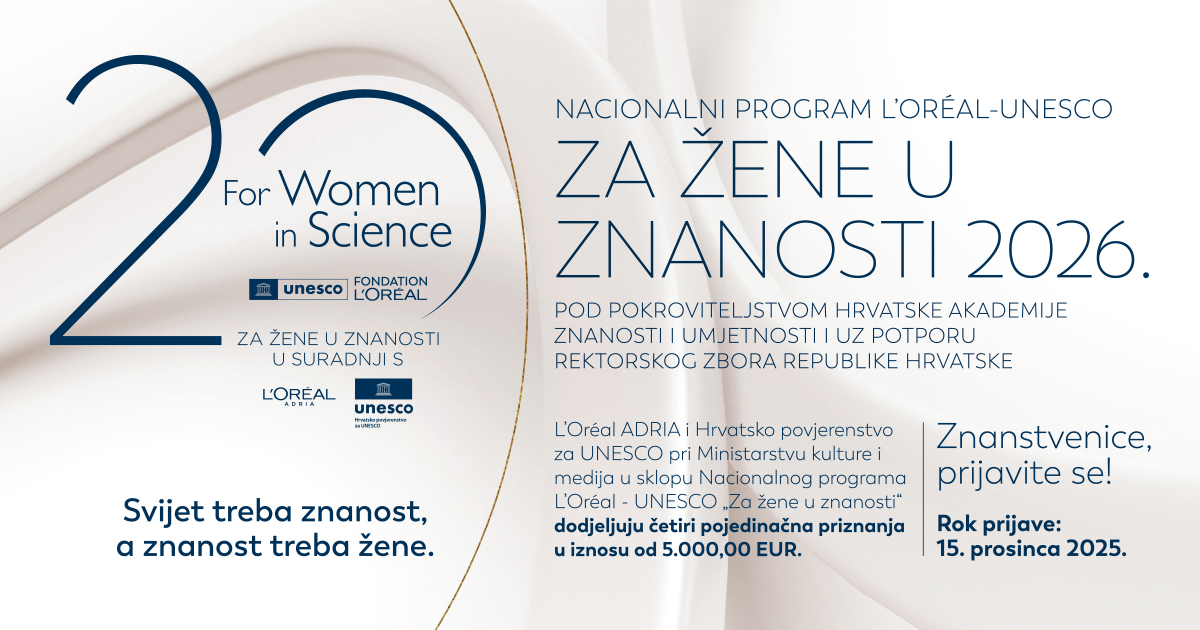
The panel marked the 20th anniversary of the National L’Oréal UNESCO “For Women in Science” program, which has been implemented in Croatia since 2006. The initiative recognizes and rewards outstanding young female scientists in the final phase of their doctoral studies in natural and interdisciplinary sciences.
Two Decades of Support for Female Scientists
The Croatian program follows the international initiative launched in 1998. It is carried out in cooperation between L’Oréal Adria and the Croatian Commission for UNESCO under the Ministry of Culture and Media. Each year, four young female scientists receive awards worth 5,000 euros each.
Globally, the program has supported more than 4,900 women scientists in over 140 countries. In Croatia, 74 scientists have been awarded so far, with four additional awards scheduled to be presented this May.
Neurosurgery as an Example of Change
Marina Raguž, a neurosurgery specialist and recipient of the 2017 award, noted positive developments within her field. Ten years ago, there was only one female neurosurgery specialist in Croatia. Today, there are ten. However, leadership positions in medicine remain predominantly held by men. According to panel participants, expertise and competence should be the only criteria for advancement.
Mentorship and Institutional Support Matter
The discussion emphasized the importance of mentorship and institutional backing in shaping scientific careers. Data show that between 2014 and 2024, the share of female doctoral candidates in biomedicine and health sciences, biotechnical sciences, social sciences, humanities, and interdisciplinary fields consistently exceeded 50 percent. In some academic years, it even surpassed 60 percent. Despite these numbers, the transition from doctoral studies to strategic and managerial positions remains a challenge.
Exhibition Marking the Anniversary
The 20th anniversary is also being marked by the exhibition “You Were My Inspiration,” dedicated to the relationship between 25 female scientists and their mentors or role models. The exhibition was opened by academician Zvonko Kusić, President of the Croatian Commission for UNESCO and Chair of the National L’Oréal UNESCO selection committee.
The exhibition is open at Cvjetni Trg, Zagreb until February 15 and will move to Zrinjevac Zagreb from February 16 to 22.