
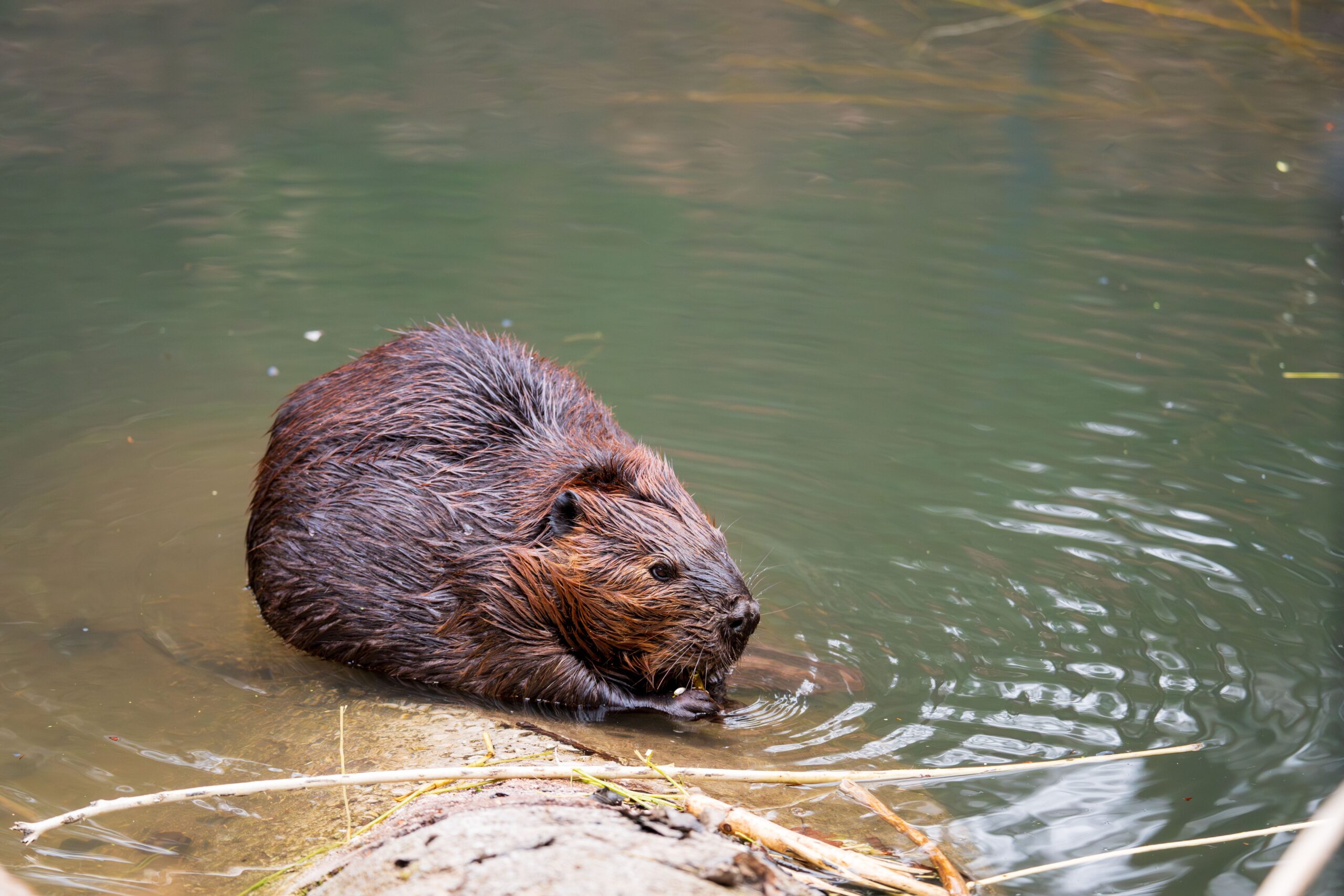
Three years ago, an unusual experiment began in West London. A family of Eurasian beavers was reintroduced to an area that had struggled with excess water for years. Today, the site has developed into a complex system of dams and wetlands, while the project is being studied as a possible model for the future coexistence of cities and wildlife.
Paradise Fields is located in Greenford, just minutes from busy roads, shops and an Underground station. In October 2023, a family of five beavers was released there: a breeding pair and three offspring. It marked the return of beavers to London after around 400 years.
The project was not launched solely to restore the species. The Greenford area had long been prone to flooding, and local authorities had considered expensive engineering works to retain and manage water. The beavers offered a different solution.
Instead of concrete, dams made of branches
Beavers build dams because they feel safer in water. Their dams create deeper pools and wetland areas that hold water and slow its movement downstream.
For the city, this means that during heavy rainfall, large volumes of water do not reach built-up areas all at once. Instead, some of the water is retained in the landscape and released gradually.
According to the Ealing Beaver Project, Greenford Station, downstream from Paradise Fields, has not flooded for three consecutive years since the beavers arrived. The project does not claim that beavers are the only reason, but their dams are now considered an important part of the area’s nature-based approach to water management.
The same ability can also help during droughts. Water held behind the dams remains in the soil and wetlands for longer, making the area more resilient during periods of low rainfall.
When one species transforms an entire landscape
Beavers are often described as ecosystem engineers because they physically reshape the environments in which they live. They fell selected trees, build dams, dig canals and create deadwood. In doing so, they create new habitats for insects, amphibians, birds, bats and many other species.
Changes were already being recorded at Paradise Fields after the first year of the project, including a greater presence of aquatic invertebrates, birds and bats associated with open water and wetland habitats.
The beavers have also adapted well to life in the middle of the city. The first kits were born in 2024, with more arriving in the following years. Today, Paradise Fields is home to a larger beaver family.
An experiment now being studied by scientists
In 2026, the project became the subject of a peer-reviewed study published in Environment and Planning E: Nature and Space. Researchers Jonathon Turnbull, Tom Fry and Jamie Lorimer examined Paradise Fields as an example of a new approach to urban nature.
Their interest goes beyond what the beavers themselves are doing. They also explore what happens when a city deliberately makes space for a wild species and adapts its own management practices to accommodate it.
The researchers describe the project through the concept of “municipal wildness”, a model in which wildlife is not simply a decorative feature of the city, but a public good accessible to local communities and an active part of how urban spaces function.






That’s really fascinating! It’s amazing to see how beavers can naturally manage water flow like that – a great example of bioengineering.